|
Alcove-
Recessed part of a room. Bed alcoves exist in
Pompeian rooms, and such placing of the sleeping quarters was
common in northern Europe through the Middle Ages and later. In
the 18th century special beds were designed to fit such
recesses. Alcoves are also used for bookcases and cabinets,
dining groups, etc.
Antique - 100 + years
old, An object having special value because of its age,
especially a domestic item or piece of furniture or handicraft
esteemed for its artistry, beauty, or period of origin.
Antiquing
-
is a blended or
shaded finish achieved by applying one or more contrasting
colored glazing liquids over a painted base. Traditionally, the
glaze is applied over white. Today any color base and glaze
combination is acceptable. This type of finishing was very
popular in the 60's and 70's.
Armoire -
a large movable cupboard or wardrobe, with doors
and shelves storing clothes.
Art Deco -
The quintessential 1920s and 1930s style for skyscrapers, homes,
cinemas, even cruise ships, Art Deco is glamorous, modern and
dramatic. French designers mixed classical and contemporary
elements, including the passionate colors of Fauvist paintings,
sensuous fabrics, exotic artifacts of Egypt, Mexico, and the
Middle and Far East, and Cubist painters geometric shapes in
round mirrors, floor treatments and barrel-shaped chairs.
American designers streamlined the style with modular and
built-in chrome and aluminum furniture, while British designers
contributed sleek materials like Bakelite and commercialized
motifs like zigzags and chevrons. -
The quintessential 1920s and 1930s style for skyscrapers, homes,
cinemas, even cruise ships, Art Deco is glamorous, modern and
dramatic. French designers mixed classical and contemporary
elements, including the passionate colors of Fauvist paintings,
sensuous fabrics, exotic artifacts of Egypt, Mexico, and the
Middle and Far East, and Cubist painters geometric shapes in
round mirrors, floor treatments and barrel-shaped chairs.
American designers streamlined the style with modular and
built-in chrome and aluminum furniture, while British designers
contributed sleek materials like Bakelite and commercialized
motifs like zigzags and chevrons.
The Arts and Crafts
style in England and America from 1860 through 1925 embraced quality materials, craftsmanship, and simple lines and
forms to fashion one lovely harmonious interior. Fabrics and
wallpapers with Gothic, floral and Japanese designs complement
rather than overwhelm rooms, especially those created by
movement founder William Morris. Furniture was block-shaped,
usually oak, like Gustav Stickley's Mission pieces. Lighting was
beautiful and useful, especially Louis Comfort Tiffany's
stained-glass lamps and Dick Van Erp's hammered copper lamps.
embraced quality materials, craftsmanship, and simple lines and
forms to fashion one lovely harmonious interior. Fabrics and
wallpapers with Gothic, floral and Japanese designs complement
rather than overwhelm rooms, especially those created by
movement founder William Morris. Furniture was block-shaped,
usually oak, like Gustav Stickley's Mission pieces. Lighting was
beautiful and useful, especially Louis Comfort Tiffany's
stained-glass lamps and Dick Van Erp's hammered copper lamps.
The Baroque
style is theatrical and extravagant. Decorative elements are
intended to startle, electrify and flaunt wealth. This was
also true for the European courts and aristocracy that embraced
the 18th century style. Furniture is massive and opulent,
textiles are luxurious and expensive, colors are royally rich
and glittery, accessories are exotic and sparkling, floors are
dramatic. The style was most magnificently showcased at Frances
Louis XIVs palace at Versailles.
Bergere -comfortable
French arm chair with upholstered back and sides and squab
cushions, Popular in Louis XIV and Louis XV periods.
Blockfront
chest:
a bookcase, chest
or china cabinet made
of three sections,
the center section sticking out.
Brewster Chair:
The Brewster Chair is representative of the
Jacobean period of furniture design, dating from about the
middle of the 17th century. Sometimes called the Pilgrim style,
their furniture is characterized by heavy turnings for legs and
spindles, elaborate relief carving and wood usually of oak and
or pine.
Brocades:
a woven fabric with a raised pattern that
resembles embroidery
Buffet: a functional cupboard, usually the bottom part of
a china cabinet.
Bun Foot: a flattened ball, or bun shape, with a slender
ankle above. Popular in William and Mary period.
Burl: knot on a tree that creates beautiful swirled
patterns when used as a veneer
Camphored
Refers to edges or corners that are
worn and/or rounded with use. This condition usually enhances
the piece and adds value to it.
Collectibles
- One of a group or class of objects, such as period glass or
historical memorabilia, sought by collectors
Conservation-
to keep from decaying
 Contemporary Contemporary
- Current; sleek; modern: contemporary trends in design.
The Contemporary style honors current living and values. In the
1990s and today, interiors are functional, physically
comfortable, environmentally conscious, and versatile to suit
the hurried individuals idiosyncratic tastes and needs of the
moment. Bright, airy and uncluttered, the style embraces white
walls, blonde woods, fresh colors, sensual textiles and hi-tech
fabrics, deep cushions, open or lightly draped windows,
clean-lined mobile furniture, and materials that are natural,
recyclable, or industrial such as glass and steel. The result:
eclectic yet cozy retreats from fast-paced pressures.
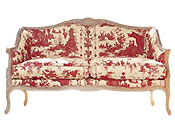
Enjoying a great
surge in popularity, the French Country
style of decorating is one of the
warmest and most welcoming. Not for the faint of heart, the
rich, vivid colors evoke the warm tones of the Provencal
countrysidegolden yellows, vivid indigos and pure blues, deep
reds and russets, and bright, creamy greens.
 Gallery
Rail:
The brass rail on the top of a dining room buffet
table or server. Gallery
Rail:
The brass rail on the top of a dining room buffet
table or server.
Gilding:
coating with a thin layer of gold, or a substance
resembling gold.
Glaze: a color development step in the furniture
furnishing process - properly
hand- whipped and blended to highlighted grain characteristics of wood.
Lacquer.
A clear finish.
Mineral
spirits. An inexpensive paint thinner
which cleans brushes, thins paint, cleans furniture, and removes
wax.
Paraffin.
A wax applied to the edges of drawers and other movable parts to
prevent sticking.
Penetrating
resin. A finish which darkens and
penetrates the surface of the wood. This type of finish is not
easily removed.
Pickled
-
finishes are made with white or another
color over a natural or lightly stained wood color. The effect
is similar to the old blonde finishes of the 40's and 50's,
except it is usually done on furniture with lots of crevices for
the white to stick into. The result has a more interesting
texture with the natural grain of the wood showing through and
highlighted with the white.
Polyurethane.
A clear, acrylic finish.
Refurbish
- renovate, make as if
new
Restoration -
return to a former state
Sideboard:
another word for a serving table or
buffet. In the dining room this piece is often used to hold food
ready for serving. It can relatively small with a fold-out top
for more surface space, or simply be long and narrow.
Traditional, 19th century designs often have a brass rail around
the sides and back to keep things from sliding off the top. The
rail is usually called a "gallery."
Tack cloth.
A sticky cloth which picks up fine dust. It is used to wipe over
wood before a stain or finish is applied.
Varnish.
A resinous finish used to give a glossy surface to wood.
Victorian
- Being in the highly ornamented, massive style of architecture,
decor, and furnishings popular in 19th-century England. The
Victorian style of 19th century England and America revived
elements of several styles, including classical Greek, Romanesque, Tudor, Gothic,
Elizabethan, Italianate, Egyptian and Oriental. Eclectic rooms
are dark and cluttered with such hallmark features as boldly
patterned and colored wallpaper, Oriental rugs, ornate fringe
and tassel trimming on luxurious curtains, artistic arrangements
of knickknacks, stained-glass windows and solid, bulging
furniture with deep-buttoned upholstery
styles, including classical Greek, Romanesque, Tudor, Gothic,
Elizabethan, Italianate, Egyptian and Oriental. Eclectic rooms
are dark and cluttered with such hallmark features as boldly
patterned and colored wallpaper, Oriental rugs, ornate fringe
and tassel trimming on luxurious curtains, artistic arrangements
of knickknacks, stained-glass windows and solid, bulging
furniture with deep-buttoned upholstery |